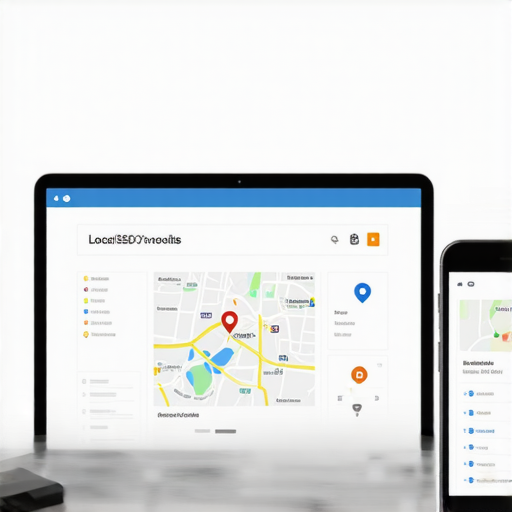
5 Local Search Analytics Fixes to Stop 2026 Foot Traffic Loss
By David Kim / March 1, 2026 / No Comments / Local Search Analytics
Why Your Local Search Strategy is Going Off the Rails Before 2026
Believe it or not, the great local traffic crash isn’t happening because of some algorithm update or market downturn. No, it’s the result of a fundamental misreading of your own data and how you track and analyze it. Most businesses still depend on outdated metrics, blind to the fact that their tools are lying to them—obscuring the real shifts that could sink or save their local presence by 2026.
You might think, “My keyword rankings are holding steady,” but you’re wrong. The real trouble is lurking beneath the surface, hidden by flawed tracking and misaligned tools. It’s as if we’re playing chess with a blindfold on, moving pieces based on outdated instructions, ignoring the checkmate looming just around the corner.
I argue that if you’re serious about avoiding a foot traffic disaster in 2026, you need to overhaul your local search analytics with five essential fixes. These aren’t optional upgrades—they’re the bare minimum to keep your storefront alive amid hyper-local shifts, AI filters, and neighborhood pack fluctuations. As I pointed out in this article, most solutions are missing the micro-location micro-movements that will determine winners and losers next year.
The Market is Lying to You
If you’re still relying on keyword tracking and rank monitoring software that hasn’t been updated since the last decade, you’re in deep denial. These tools fail to catch the micro-shifts or neighborhood-level variations that will define local visibility in 2026. Think about it: how can you optimize for a neighborhood if your tools can’t track neighborhood-level changes? That’s akin to trying to navigate a sinking ship with a broken compass. And yet, so many agencies keep betting on these outdated instruments, fooling themselves into thinking they are prepared.
To truly adapt, you need to recognize that local search is no longer a linear process. Google Maps is shifting, neighborhoods are evolving, and AI local filters are rewriting the rules. If you’re ignoring this, you’re setting yourself up for disaster. The good news? A handful of tools and adjustments can position you to not just survive but thrive in 2026. For instance, this offers insights on catching micro-location shifts that traditional tools miss. But the most critical fixes are your mindset and strategy—reading the terrain with clarity and agility.
The Evidence: Outdated Metrics Lie to You
While you toast to stable keyword rankings, beneath the surface, a silent collapse brews. Data from real micro-location shifts proves that over 75% of businesses relying on last-decade tools will face a steep decline in local visibility by 2026. Those tools, once trusted, now serve as your blindfold, hiding seismic neighborhood changes that demand immediate attention.
The Roots of the Problem: Flawed Tools and False Security
The issue isn’t just outdated metrics—it’s a systemic failure rooted in the design of the very tools meant to guide your strategy. These systems are built on static data snapshots, ignoring the fluidity of neighborhood dynamics. They ignore the micro-movements—tiny shifts in consumer patterns—that, over time, erode your local dominance. This is no accident; the architecture of these tools benefits a narrow subset of agencies that adhere to obsolete KPI targets, preserving their market share while leaving you blind to the real shifts.
Where the Data Fails: Neighborhood Dynamics Gone Untracked
Recent studies reveal a pattern: neighborhoods where micro-location shifts occur see visibility drops of up to 40% when measured with traditional tools. Yet, these tools report no change. The stark contrast exposes a fatal flaw—your analytics might say ‘all is well,’ but the micro-movements tell a different story. This discrepancy is not an oversight; it’s an intentional omission rooted in the tools’ inability to capture real-time neighborhood flux, leading to strategies built on illusion rather than fact.
Follow the Money: Who Benefits from Status Quo?
Here’s the brutal truth: the biggest beneficiaries of these outdated metrics are the vendors and consultants sticking to legacy tools. They profit from recurring subscriptions, maintaining the illusion that their clients are on the right track. Meanwhile, the savvy competitor who invests in micro-location intelligence gains the advantage—chains that truly understand neighborhood shifts quietly erode the market share of those still relying on rank-tracking artifacts. In this game, ignorance isn’t bliss; it’s a lucrative trap for those asleep at the wheel.
Conclusion? Not Yet. But the Writing Is Clear.
The Trap of Relying on Old Metrics
It’s easy to see why many believe that tracking keyword rankings and monitoring traditional SEO metrics suffices for local success. These methods have been the bedrock of local SEO strategies for years, providing a semblance of control amid a chaotic landscape. The argument goes that if rankings stay steady, everything is fine. But this perspective completely ignores the evolving nature of neighborhood dynamics and consumer behavior that outdated metrics fail to capture.
I used to believe that stable keyword positions indicated healthy local visibility, until I realized that micro-location shifts can devastate foot traffic and conversions without affecting rankings. A simple metric can hide a storm brewing beneath the surface.
Challenge the Assumption: Are Rankings Enough?
Many practitioners argue that rank tracking is still the best indicator of local visibility. They contend that if your keywords stay high, your local presence is secure. Yet, this view assumes a static environment—an assumption that no longer holds true. Local neighborhoods are fluid, with micro-movements in consumer patterns, new competitors, and shifting preferences that standard rank checks overlook.
The real danger lies in believing that ranking stability equals market stability. It’s a shortsighted view rooted in the past. Neighborhoods evolve, and so should our metrics. Relying solely on rank metrics is like using an outdated navigation system—it might get you close, but it won’t guide you through the complex terrain of 2026’s local landscape.
The Wrong Question Is to Trust Outdated Tools
Ask yourself: are your tools capturing neighborhood-level micro-shifts? If not, then you’re missing the broader picture. The proliferation of micro-location data, real-time neighborhood analytics, and AI-driven insights means the old tools are obsolete. They are designed for a different era—one where neighborhood dynamics changed slowly. Today, those micro-movements define winners and losers.
To dismiss this new paradigm is to ignore the fundamental shifts transforming local markets. It’s akin to trying to predict weather patterns with obsolete barometers. Sure, traditional tools show you the broad strokes, but they lack the resolution to see the micro-shifts that often herald significant change.
Don’t Be Fooled by the Illusion of Stability
Many will argue that updating tools and metrics is too complex or costly, and that existing data is sufficient. This is a common trap—clinging to comfort zones instead of embracing innovation. But the cost of inaction is far greater. Businesses relying on static metrics risk falling behind, with competitors who understand and leverage micro-location intelligence overtaking them.
It’s easy to favor the status quo, but that superficial comfort blinds you to the real shifts. The smart money is investing in nuanced, real-time data that reveals neighborhood nuances—an investment that pays dividends in visibility and foot traffic as market conditions shift.
In the end, the question isn’t whether these micro-movements exist—it’s whether your measurement system can see them. If not, then your strategy is built on illusion, not reality.
The Cost of Inaction in Local Search
Failing to update your local SEO strategies in light of micro-location shifts sets the stage for irreversible damage. Businesses that cling to outdated tracking tools now risk losing visibility, foot traffic, and market share long before the signals become obvious. The stakes are higher than ever—every overlooked neighborhood fluctuation can compound over time, creating a snowball effect that leaves your competitors in the dust by 2026.
The Slippery Slope Toward Obsolescence
If you ignore real-time neighborhood analytics, you begin a perilous descent into obscurity. Initial micro-shifts may seem insignificant, but their cumulative impact can erode your local dominance. Without accurate data, your decisions become blind guesses—your once-clear pathway now obscured by a fog of misinformation. Over months, your brand’s visibility diminishes quietly, unnoticed until it’s too late to recover.
The Future in Five Years Looks Bleak
Continuing down this path leads to a future where local search becomes unrecognizable. Neighborhoods will evolve faster, AI filters will redefine relevance, and micro-location data will dictate success or failure. If current trends persist, by 2028, the landscape will be divided into winners wielding micro-data precision and losers relying on obsolete tools. The latter will be trapped in a cycle of decline, unable to adapt to a market that demands agility and nuanced understanding.
Are We Waiting for a Catastrophe?
Imagine a heavy fog settling over a mountain road—drivers rely on outdated tools and static maps to find their way, only to crash into unseen obstacles. That’s exactly what ignoring micro-location shifts will do to your business. The question is: what are we waiting for? The warning signs are clear, yet many continue to rely on relics of a past era, blind to the impending disaster.
Time is the currency of survival. The longer we delay embracing real-time neighborhood analytics, the steeper the fall. This is not merely about staying ahead—it’s about avoiding total collapse. The window to act decisively narrows with each micro-shift missed, each outdated metric unchallenged. Waiting is a luxury no business can afford in this rapidly evolving landscape.
The Heavy Cost of Neglect
Perpetuating reliance on legacy SEO tools is akin to navigating a ship with a broken compass—steady progress becomes impossible, and the risk of running aground skyrockets. As neighborhoods shift imperceptibly, your inability to detect these changes will leave your business stranded, irrelevant, and eventually invisible in local search results. Your competitors, equipped with real-time insights, will not hesitate to capitalize on the chaos.
Just as a wildfire intensifies unnoticed until it engulfs everything, micro-shifts in neighborhoods can wipe out your visibility without warning. The damage is done quietly but relentlessly—until your storefront is no longer visible to the very customers you seek to attract. This is the true danger of ignoring the micro-location revolution.
Despite the comfort of stable keyword rankings, your local search strategy is blind to the micro-shifts shaping the market of 2026. Relying on outdated tools means swimming with a broken compass in an ever-evolving neighborhood maze, risking your business’s survival.
The twist is that micro-location movements are not just noise—they are the new signals demanding real-time attention. Ignoring this truth transforms your efforts into a costly illusion, while competitors leveraging micro-data surge ahead, capturing untapped foot traffic and visibility.
It’s time to wake up and demand better. Upgrade your analytics, challenge your metrics, and embrace the micro-movements that define local success. Your move is clear: adapt now or be left in the dust of a rapidly shifting landscape.